Walk into almost any serious workshop a forge, a wood shop, a welding bay, a fabrication bench and you'll find leather doing the same job it's done for generations: standing between the person and the work. A leather workshop apron isn't trade-specific by nature. It's a category built around a shared set of demands, and understanding those demands is how you pick the right one for your shop, not someone else's.
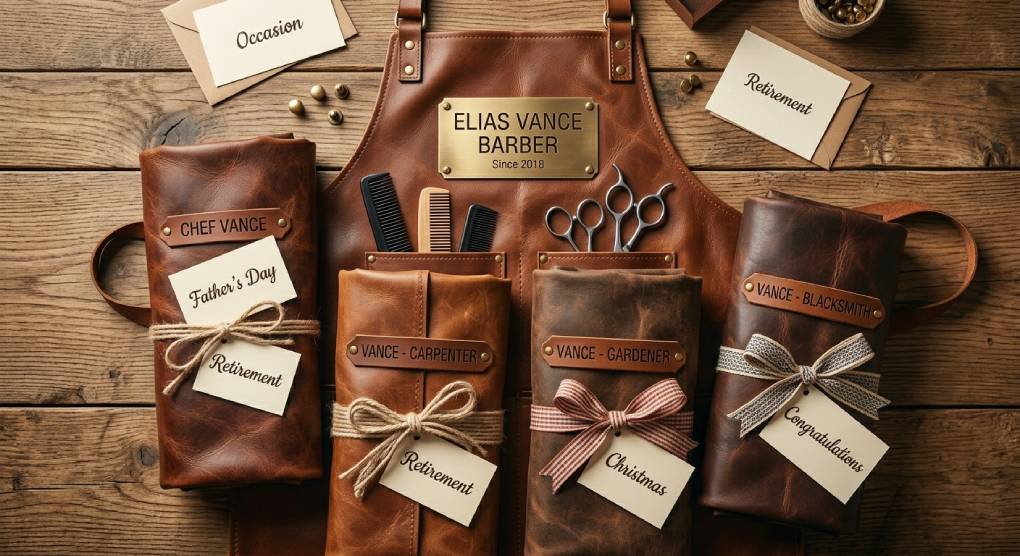
What Every Workshop Apron Has to Get Right
Regardless of what you're building, a workshop apron is judged on the same fundamentals:
-
Coverage: chest-to-thigh protection that leaves arms and shoulders free to move.
-
Tool storage: pockets that hold what you actually carry, not generic slots that fit nothing well.
-
Durability under load: an apron loaded with tools shouldn't sag, tear at the seams, or lose its shape within a season.
-
Comfort over hours: adjustable straps that distribute weight rather than digging into the neck.
-
Resistance to what your shop throws at it: sparks, sawdust, oil, abrasion, or heat, depending on the trade.
Fabric aprons fail at scale here. Canvas absorbs oil and moisture, denim tears at stress points, and neither holds up to sustained daily abuse the way leather does.
Match the Leather Weight to Your Work
Not all workshop leather is built the same, and this is where a lot of people get it wrong when buying online. Full-grain cowhide typically runs in two practical ranges:
-
1.0–1.4mm is the right weight for woodworking, general fabrication, and lighter bench work where flexibility matters as much as protection.
-
1.2–1.6mm heavier leather built for forge work, welding, and butchery, where the primary hazards are heat, sparks, and blade contact and you want more material between you and the job.
Buying too light for heavy work means premature wear. Buying too heavy for detail work means fighting a stiff apron that doesn't move with you.
Pockets Should Match the Trade, Not Just Look Good
A generic pocket layout is a sign of a generic apron. A real workshop apron accounts for what its wearer actually carries:
-
Woodworkers need slots sized for a combination square, chisels, and a tape measure.
-
Blacksmiths and welders need heat-resistant zones and space for gloves and tongs without interference.
-
General fabricators need flexible storage that adapts across cutting, grinding, and assembly work in a single session.
If your current apron's pockets don't match your actual toolkit, you're not using a workshop apron; you're wearing a costume.
Straps and Hardware: The Part People Overlook
Brass hardware at every connection point matters more than it seems, especially in shops with moisture, heat, or metal dust in the air it resists corrosion where cheaper metal hardware seizes up or rusts within a year. Straps cut from the same leather as the apron body, rather than a lighter webbing, hold up under the weight of a fully loaded front instead of stretching or fraying first.
One Apron, Multiple Crafts
Plenty of makers work across more than one discipline: wood and metal, forge and fabrication, craft and repair. A well-built leather workshop apron in the mid-weight range (around 1.2mm) tends to be the most cross-applicable choice, handling moderate heat, sawdust, and general shop abrasion without being overbuilt for lighter tasks or underbuilt for heavier ones.
The Bottom Line
A leather workshop apron earns its place in a shop the same way a good vise or a reliable workbench does through daily use that doesn't let you down. Match the leather weight to what your shop actually demands, make sure the pockets fit your real toolkit, and don't skimp on hardware. Get those three things right, and you're looking at gear that lasts years, not months.
Lapron makes full-grain leather workshop aprons across nine dedicated trade collections, from blacksmithing to woodworking to welding, each built with brass hardware, adjustable straps, and free engraving.Shop leather aprons by trade and find the weight and pocket layout built for your shop.